
Dr. BJ Fogg – Design for Behavior Change: The Complete Guide to Creating Lasting Habits and Transforming Human Behavior
Behavior change has become one of the most valuable skills in modern life. Whether individuals want to improve productivity, develop healthy habits, increase business performance, enhance customer engagement, or achieve personal growth, understanding the science behind human behavior is essential. This is where Dr. BJ Fogg – Design for Behavior Change stands as one of the most influential frameworks available today.
Developed by Dr. BJ Fogg, founder of the Behavior Design Lab at Stanford University, this groundbreaking methodology focuses on understanding why people act the way they do and how behavior can be intentionally designed to create meaningful and lasting change. Unlike traditional approaches that rely heavily on motivation, behavior design emphasizes simplicity, consistency, and strategic action.
The principles taught within this framework have influenced entrepreneurs, marketers, product designers, educators, healthcare professionals, and individuals seeking personal development. By applying these proven techniques, anyone can learn how to build habits that stick while eliminating behaviors that no longer serve their goals.
Who Is Dr. BJ Fogg?
Dr. BJ Fogg is a renowned behavioral scientist, researcher, author, and educator best known for pioneering the field of behavior design. Through decades of research at Stanford University, he developed innovative frameworks that explain how habits are formed and how lasting behavioral change can occur.
His work has influenced some of the world’s largest technology companies, startups, and organizations. Many successful entrepreneurs, product designers, and business leaders have utilized his behavioral science principles to improve user engagement and create positive experiences.
His research demonstrates that successful behavior change is not primarily about willpower. Instead, it is about creating systems that make desired actions easier to perform consistently.
Understanding Behavior Design
Behavior design is the practice of intentionally creating conditions that encourage specific actions and habits. Rather than forcing change through discipline alone, behavior design focuses on making desired behaviors simple, achievable, and rewarding.
The philosophy behind behavior design can be summarized in a simple idea:
People change best by feeling successful, not by feeling pressured.
This concept challenges many traditional self-improvement methods that rely on motivation, guilt, or intense effort. Instead, behavior design emphasizes creating small wins that naturally build momentum over time.
The approach recognizes that human behavior is influenced by multiple factors, including:
- Motivation
- Ability
- Environmental triggers
- Emotional responses
- Daily routines
- Social influences
- Habit patterns
Understanding these factors allows individuals and organizations to design systems that encourage positive actions consistently.
The Fogg Behavior Model
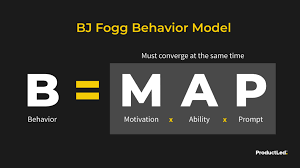
One of the most influential concepts taught in behavior design is the Fogg Behavior Model.
According to this model, behavior occurs when three elements come together at the same moment:
Motivation
Motivation refers to a person’s desire to perform a behavior. Higher motivation increases the likelihood of action, but motivation alone is often unreliable because it fluctuates over time.
Examples include:
- Desire to lose weight
- Desire to earn more money
- Desire to improve health
- Desire to grow a business
While motivation is important, it should never be the only factor supporting behavior change.
Ability
Ability refers to how easy or difficult a behavior is to perform.
The easier a behavior becomes, the more likely people are to do it.
Examples:
- Drinking a glass of water
- Reading one page of a book
- Writing one sentence
- Walking for two minutes
When actions are simplified, resistance decreases dramatically.
Prompt
A prompt serves as the trigger that reminds someone to perform a behavior.
Examples include:
- Phone notifications
- Calendar reminders
- Existing habits
- Visual cues
- Environmental signals
Without a prompt, even highly motivated individuals may forget to act.
The model demonstrates that successful behavior occurs when motivation, ability, and prompts align effectively.
Why Traditional Habit Building Often Fails
Many people struggle with behavior change because they start with goals that are too ambitious.
Examples include:
- Exercising for two hours daily
- Reading fifty books immediately
- Completely changing a diet overnight
- Launching multiple business projects simultaneously
Such approaches create excessive friction and often lead to failure.
Behavior design teaches that lasting success comes from starting small and building consistency before increasing complexity.
Rather than focusing on dramatic transformations, individuals focus on repeatable actions that can be performed every day.
This shift dramatically increases long-term success rates.
The Power of Tiny Habits
One of the most famous concepts associated with Dr. BJ Fogg’s teachings is the Tiny Habits method.
Tiny Habits focuses on creating extremely small behaviors that are almost impossible to fail.
Examples include:
- One push-up
- One minute of exercise
- One deep breath
- One page of reading
- One glass of water
The goal is not immediate results.
The goal is consistency.
Small actions create positive emotions and reinforce identity. Over time, these tiny behaviors naturally expand into larger habits.
This method removes the pressure and overwhelm that often prevent people from taking action.
Creating Lasting Habit Loops
Successful habits follow a predictable structure.
Trigger
Every habit begins with a trigger that signals the brain to act.
Examples:
- Waking up
- Brushing teeth
- Finishing lunch
- Returning home
Action
The desired behavior follows the trigger.
Examples:
- Stretching
- Reading
- Drinking water
- Writing
Celebration
Celebration is a critical component often overlooked in traditional habit-building methods.
Positive emotions strengthen neural pathways and reinforce behavior.
Examples:
- Smiling
- Saying “Great job”
- Feeling proud
- Acknowledging progress
The stronger the positive emotion, the stronger the habit formation process becomes.
Applications in Business and Marketing
Behavior design principles extend far beyond personal development.
Businesses use these strategies to:
- Improve customer engagement
- Increase user retention
- Enhance product adoption
- Boost conversion rates
- Simplify customer experiences
Successful products often succeed because they make desired actions easy and intuitive.
Examples include:
- One-click purchases
- Simple onboarding processes
- Personalized recommendations
- Automated reminders
- Gamification systems
By understanding human behavior, organizations can create experiences that naturally encourage engagement.
Behavior Design in Health and Wellness
Healthcare professionals increasingly use behavior design techniques to improve patient outcomes.
Applications include:
- Medication adherence
- Exercise routines
- Nutrition improvement
- Stress reduction
- Sleep optimization
Rather than asking patients to make drastic lifestyle changes, behavior design encourages small, sustainable improvements.
Research consistently shows that small changes maintained over time often produce better results than aggressive short-term interventions.
Improving Productivity Through Behavior Design
Productivity challenges are often behavior challenges.
Many people struggle because they rely solely on motivation rather than effective systems.
Behavior design improves productivity by:
Reducing Friction
Make important tasks easier to start.
Examples:
- Keep work materials accessible
- Create templates
- Prepare environments in advance
Increasing Clarity
Clearly define desired actions.
Instead of:
“Work on project.”
Use:
“Write 100 words.”
Specific actions are easier to execute.
Creating Reliable Prompts
Attach behaviors to existing routines.
Examples:
- Review goals after morning coffee
- Plan tasks after lunch
- Journal before bed
This creates consistency without requiring constant decision-making.
The Psychology of Sustainable Change
One of the most valuable insights from behavior design is understanding that people are not inherently lazy.
Instead, many systems are poorly designed.
When behaviors feel difficult, confusing, or overwhelming, people naturally avoid them.
Behavior design shifts the focus from blaming individuals to improving systems.
Questions become:
- How can this behavior be simpler?
- What obstacles can be removed?
- What prompt would help?
- How can success feel rewarding?
This perspective creates more compassionate and effective approaches to change.
Common Mistakes in Behavior Change
Many individuals unknowingly sabotage their progress through several common mistakes.
Setting Unrealistic Goals
Large goals often create fear and resistance.
Start smaller than feels necessary.
Depending on Motivation
Motivation fluctuates daily.
Systems outperform motivation over time.
Ignoring Environment Design
Environment strongly influences behavior.
Design surroundings that support desired actions.
Lack of Celebration
Positive emotions accelerate habit formation.
Celebrate every successful action, regardless of size.
Expecting Immediate Results
Behavior change is a process.
Consistency matters more than speed.
Building a Personal Behavior Design System
Anyone can begin applying these principles immediately.
Step 1: Choose One Behavior
Focus on a single behavior rather than multiple goals.
Step 2: Make It Tiny
Reduce the behavior until it feels effortless.
Step 3: Attach It to an Existing Habit
Use a reliable trigger.
Step 4: Celebrate Success
Create positive emotional reinforcement.
Step 5: Repeat Daily
Consistency creates lasting transformation.
Over time, these small actions compound into significant improvements across health, productivity, relationships, and business performance.
Why Behavior Design Matters More Than Ever
Modern life presents countless distractions, competing priorities, and information overload. Traditional approaches based solely on discipline often fail because they ignore how human behavior actually works.
Behavior design provides a practical, research-backed alternative that aligns with human psychology rather than fighting against it.
By focusing on simplicity, consistency, and positive reinforcement, individuals can create sustainable habits that support long-term success.
Whether the goal is personal growth, business improvement, health optimization, or professional development, behavior design offers a proven pathway toward meaningful change.
Final Thoughts
Dr. BJ Fogg – Design for Behavior Change represents one of the most influential frameworks for understanding and improving human behavior. By combining behavioral science, habit formation principles, and practical implementation strategies, this methodology provides a powerful roadmap for creating lasting change.
The key lesson is simple yet transformative: successful behavior change does not require extraordinary motivation. Instead, it requires designing behaviors that are easy to perform, consistently triggered, and emotionally rewarding.
Those who embrace these principles often discover that sustainable success comes not from massive actions, but from tiny behaviors repeated consistently over time. As these habits accumulate, they create remarkable transformations in health, productivity, relationships, and overall quality of life.



Reviews
There are no reviews yet.