
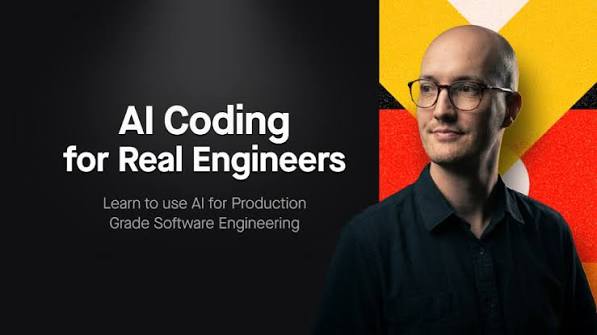
Matt Pocock – AI Coding for Real Engineers
Introduction
Artificial Intelligence is rapidly transforming the software development landscape. What once seemed like a futuristic concept has become an essential tool in the daily workflow of modern developers. From generating code snippets and automating repetitive tasks to debugging complex systems and accelerating development cycles, AI is changing how engineers build software.
Matt Pocock – AI Coding for Real Engineers is designed specifically for developers who want to harness the power of AI in practical, real-world engineering environments. Rather than focusing on theoretical concepts or unrealistic demonstrations, this course emphasizes proven techniques that software engineers can immediately apply to their projects, teams, and development workflows.
Created by Matt Pocock, one of the most respected voices in the TypeScript and modern web development community, this training provides a comprehensive framework for integrating AI tools into professional software engineering practices. Whether you are a frontend developer, backend engineer, full-stack programmer, DevOps specialist, or technical lead, the course offers actionable strategies that can significantly improve productivity and code quality.
Why AI Is Becoming Essential for Software Engineers
The software industry is evolving at an unprecedented pace. Development teams are expected to ship features faster, maintain higher code quality, reduce technical debt, and adapt to changing business requirements.
AI-powered development tools help engineers:
- Generate boilerplate code quickly
- Improve development speed
- Reduce repetitive tasks
- Assist with debugging
- Create documentation automatically
- Improve testing coverage
- Accelerate learning of new frameworks
- Enhance code reviews
- Simplify refactoring processes
- Increase overall productivity
However, using AI effectively requires more than simply asking a chatbot to write code. Engineers must learn how to communicate with AI systems, validate outputs, maintain architectural integrity, and avoid introducing hidden bugs or security vulnerabilities.
This is exactly where Matt Pocock – AI Coding for Real Engineers delivers exceptional value.
What Makes This Course Different?
Many AI coding tutorials focus on flashy demonstrations that rarely reflect actual software engineering workflows. Developers often discover that these techniques fail when applied to production applications.
This course takes a completely different approach.
Instead of showcasing isolated examples, it focuses on realistic engineering scenarios such as:
Building Production Features
Students learn how AI can accelerate feature development while maintaining code quality standards. The course demonstrates practical workflows that integrate AI into everyday development tasks without sacrificing maintainability.
Refactoring Existing Codebases
Large-scale applications often contain legacy code. Engineers discover how AI can assist in modernizing and restructuring code while preserving functionality and reducing risk.
Debugging Complex Problems
Debugging is one of the most time-consuming aspects of software development. The course explores methods for using AI as a collaborative debugging assistant capable of identifying issues, suggesting fixes, and explaining unexpected behavior.
Creating Reliable Tests
Testing remains a critical component of software engineering. AI can help generate unit tests, integration tests, and edge-case scenarios while reducing manual effort.
Improving Developer Productivity
The course teaches engineers how to create repeatable workflows that maximize efficiency without becoming overly dependent on AI-generated solutions.
Learning AI Through Real Engineering Problems
One of the strongest aspects of Matt Pocock – AI Coding for Real Engineers is its emphasis on solving authentic software engineering challenges.
Rather than presenting artificial examples, the training focuses on practical situations developers encounter every day.
Examples include:
- Implementing new features
- Reviewing pull requests
- Understanding unfamiliar codebases
- Migrating technologies
- Creating reusable components
- Improving application performance
- Writing technical documentation
- Generating test coverage
- Debugging production issues
- Optimizing development workflows
This practical methodology ensures that every lesson contributes directly to real-world engineering success.
Understanding Effective AI Prompting for Developers
Prompting is one of the most important skills for modern software engineers.
Many developers experience inconsistent AI results because they provide vague or incomplete instructions. The course demonstrates how to create highly effective prompts that generate accurate, useful, and maintainable code outputs.
Key areas include:
Context Engineering
Developers learn how to provide sufficient context so AI systems understand project requirements, architecture, coding standards, and business logic.
Constraint-Based Prompting
Engineers discover how to establish clear constraints that guide AI-generated solutions toward production-ready implementations.
Iterative Refinement
The course teaches a structured process for refining outputs through multiple interactions rather than expecting perfect results from a single prompt.
Architecture-Aware Instructions
Students learn how to align AI-generated code with existing architectural patterns and team conventions.
These skills dramatically improve the quality and reliability of AI-assisted development.
AI as a Development Partner
The most successful engineers do not view AI as a replacement for software development expertise.
Instead, they use AI as an intelligent collaborator.
This course demonstrates how developers can leverage AI for:
Code Generation
Generate repetitive code structures while focusing human effort on architecture and business logic.
Knowledge Discovery
Quickly understand new technologies, frameworks, APIs, and libraries.
Documentation Creation
Produce technical documentation, implementation notes, and project summaries efficiently.
Problem Solving
Explore multiple approaches to solving engineering challenges.
Code Review Assistance
Identify potential improvements and uncover hidden issues before deployment.
By treating AI as a development partner rather than an autonomous coder, engineers can achieve significantly better outcomes.
The Importance of Verification
One of the most critical lessons covered in Matt Pocock – AI Coding for Real Engineers is verification.
AI-generated code should never be accepted blindly.
Developers learn techniques for:
- Reviewing generated code
- Identifying logical flaws
- Detecting security risks
- Validating business requirements
- Ensuring performance standards
- Maintaining code quality
- Avoiding hallucinated implementations
- Verifying API integrations
- Testing generated solutions thoroughly
This engineering-first mindset helps teams use AI responsibly and effectively.
Building Faster Without Sacrificing Quality
Speed alone is not enough.
Many development teams struggle because rapid delivery often introduces technical debt. The course explores how AI can accelerate development while preserving software quality standards.
Topics include:
Clean Code Principles
AI outputs should remain readable, maintainable, and scalable.
Consistent Architecture
Generated code must align with existing project structures and design patterns.
Automated Testing
Every significant change should be supported by comprehensive testing strategies.
Long-Term Maintainability
Engineers learn how to avoid short-term shortcuts that create future maintenance challenges.
The result is a balanced approach that combines speed with engineering excellence.
Who Should Take This Course?
This training is valuable for a wide range of software professionals.
Frontend Developers
Learn how AI can accelerate UI development, component creation, styling, testing, and optimization.
Backend Engineers
Discover strategies for API development, database interactions, business logic implementation, and debugging.
Full-Stack Developers
Build complete applications more efficiently using AI-assisted workflows.
Technical Leads
Understand how AI can improve team productivity while maintaining development standards.
Engineering Managers
Gain insight into how AI affects modern software teams and development processes.
Experienced Developers
Expand existing expertise with practical AI-enhanced engineering techniques.
Junior Engineers
Accelerate learning and improve coding confidence through AI-assisted development.
Key Benefits of AI-Powered Engineering
Developers who successfully integrate AI into their workflow often experience measurable improvements.
Benefits include:
- Faster feature delivery
- Reduced development time
- Improved productivity
- Better documentation
- Enhanced code quality
- Faster debugging cycles
- Improved testing coverage
- Reduced repetitive work
- More efficient learning
- Increased engineering confidence
When combined with strong software engineering principles, these advantages can significantly impact both individual and team performance.
The Future of Software Development
AI is no longer a temporary trend.
It is becoming a permanent component of modern software engineering workflows. Engineers who understand how to use AI effectively will gain a significant competitive advantage in the years ahead.
Organizations increasingly seek developers who can:
- Work efficiently with AI tools
- Maintain code quality standards
- Build scalable systems
- Verify AI-generated outputs
- Improve team productivity
- Adapt to emerging technologies
Developing these capabilities today positions engineers for long-term success in an AI-driven industry.
Final Thoughts
Matt Pocock – AI Coding for Real Engineers provides a practical roadmap for integrating artificial intelligence into professional software development. Rather than focusing on hype or unrealistic promises, the course emphasizes real engineering workflows, proven productivity techniques, and responsible AI adoption.
Developers who complete this training gain valuable skills for using AI effectively across coding, debugging, testing, documentation, refactoring, and project development. More importantly, they learn how to combine AI capabilities with sound engineering judgment, ensuring that speed never comes at the expense of quality.
As software development continues to evolve, the ability to collaborate effectively with AI will become one of the defining skills of successful engineers. This course offers a comprehensive foundation for mastering that future today.


Reviews
There are no reviews yet.