
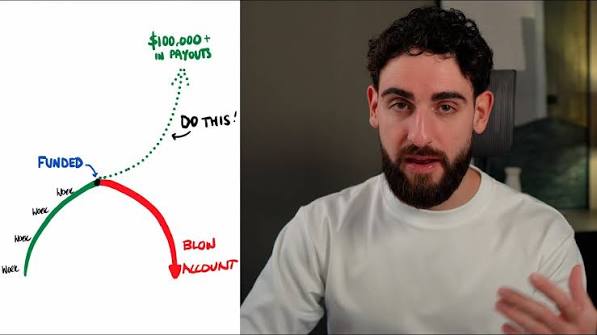
Patrick Bailouni – Master Your Trading Mindset
Trading success is often misunderstood. Many aspiring traders spend countless hours searching for the perfect strategy, indicator, or market setup, believing that technical knowledge alone will unlock consistent profitability. While strategies and market analysis are important, experienced traders understand that long-term success depends heavily on mindset, emotional control, and disciplined execution.
Patrick Bailouni – Master Your Trading Mindset is designed to address the psychological side of trading that many traders overlook. Rather than focusing solely on entries, exits, and chart patterns, this training explores the mental frameworks that separate successful traders from those who struggle with inconsistency.
The program emphasizes the development of confidence, emotional resilience, risk management habits, and decision-making skills. By helping traders identify and eliminate destructive behaviors, the course aims to create a foundation for sustainable performance in any market condition.
Whether you are trading stocks, forex, futures, options, or cryptocurrencies, understanding the psychological elements behind trading decisions can significantly improve consistency and overall results.
Why Trading Psychology Matters
Most traders eventually realize that knowledge alone is not enough. Even with a profitable strategy, emotional mistakes can destroy performance.
Common psychological challenges include:
- Fear of losing money
- Overtrading
- Revenge trading
- Lack of patience
- Emotional decision-making
- Hesitation during valid setups
- Excessive risk-taking
- Lack of confidence
- Inconsistent execution
These issues often stem from deeply rooted beliefs, habits, and emotional responses that influence decision-making under pressure.
The reality is that markets constantly test a trader’s mental strength. Every trade involves uncertainty, and managing that uncertainty requires a strong psychological foundation.
This is where mindset-focused education becomes invaluable.
Understanding the Core Philosophy
The central philosophy behind this training is simple:
Successful trading begins with mastering yourself before attempting to master the market.
Markets are unpredictable. Traders cannot control price movement, news events, or market volatility.
However, traders can control:
- Their reactions
- Risk exposure
- Emotional state
- Trading routines
- Decision-making process
- Discipline and consistency
By shifting focus from uncontrollable factors to controllable actions, traders develop a more professional and sustainable approach to market participation.
Building Emotional Discipline
One of the primary objectives of the program is helping traders build emotional discipline.
Many traders experience emotional highs after winning trades and emotional lows after losses. These fluctuations often lead to irrational decisions that negatively impact performance.
Developing emotional discipline allows traders to:
- Stay calm during volatility
- Follow trading plans consistently
- Accept losses without frustration
- Avoid impulsive decisions
- Maintain confidence after setbacks
Professional traders understand that losses are part of the business. Emotional discipline helps them remain objective regardless of short-term outcomes.
The Importance of Confidence in Trading
Confidence plays a crucial role in trading performance.
Without confidence, traders often:
- Exit trades too early
- Miss opportunities
- Hesitate during valid setups
- Constantly change strategies
- Seek endless confirmation
However, true confidence is not based on hope or optimism.
Real trading confidence comes from:
- Preparation
- Backtesting
- Risk management
- Experience
- Consistent execution
The training focuses on developing authentic confidence rooted in process rather than outcome.
This distinction is important because outcome-based confidence disappears after a few losing trades, while process-based confidence remains stable over time.
Overcoming Fear and Anxiety
Fear is one of the biggest obstacles traders face.
Fear can appear in several forms:
Fear of Losing
Many traders become paralyzed by the possibility of loss. As a result, they avoid taking valid trades or interfere with positions prematurely.
Fear of Missing Out (FOMO)
Traders often chase markets after seeing rapid price movements. This behavior frequently leads to poor entries and unnecessary losses.
Fear of Being Wrong
Some traders struggle to accept losses because they associate losing trades with personal failure.
The course helps traders understand these fears and provides frameworks for managing them effectively.
By developing awareness and structured decision-making processes, traders can reduce emotional interference and improve consistency.
Developing a Professional Trader Identity
One of the most powerful concepts in trading psychology is identity.
Many struggling traders unknowingly adopt behaviors that conflict with professional trading principles.
For example:
- Gambling instead of investing
- Chasing excitement
- Seeking quick profits
- Ignoring risk management
- Acting impulsively
Professional traders approach markets differently.
They focus on:
- Long-term consistency
- Risk control
- Process improvement
- Continuous learning
- Statistical thinking
The program encourages traders to develop a professional identity that supports disciplined decision-making and long-term growth.
Risk Management Psychology
Risk management is not only a technical skill but also a psychological one.
Many traders understand risk management intellectually but struggle to implement it consistently.
Common mistakes include:
- Increasing position sizes after losses
- Risking too much on single trades
- Ignoring stop losses
- Moving stops emotionally
- Overleveraging accounts
Strong risk management creates emotional stability because traders know that no single trade can significantly damage their capital.
When risk is controlled, decision-making becomes clearer and more objective.
This mindset shift often leads to better performance and greater confidence.
Breaking Destructive Trading Habits
Trading habits directly influence results.
Negative habits may include:
- Constant chart watching
- Overtrading
- Emotional entries
- Ignoring trade plans
- Impulsive risk-taking
Positive habits include:
- Pre-market preparation
- Journaling trades
- Reviewing performance
- Following rules
- Maintaining discipline
The course emphasizes habit formation because consistent actions ultimately determine long-term success.
Small improvements repeated daily can produce significant results over time.
The Power of Trading Journals
A trading journal is one of the most effective tools for self-improvement.
Many traders focus only on profits and losses, but a journal provides deeper insights into behavior patterns.
A quality journal helps traders:
- Track emotional states
- Identify recurring mistakes
- Measure discipline
- Evaluate execution quality
- Improve decision-making
Through regular review, traders gain greater self-awareness and uncover areas that require improvement.
This process accelerates growth and helps eliminate costly mistakes.
Managing Losses Like a Professional
Every trader experiences losing trades.
The difference between successful and unsuccessful traders often comes down to how they respond to losses.
Professional traders:
- Accept losses quickly
- Focus on execution quality
- Avoid emotional reactions
- Follow predefined risk parameters
- Learn from mistakes
Unsuccessful traders often:
- Revenge trade
- Increase risk
- Ignore rules
- Chase losses
- Become emotionally attached
The mindset training teaches traders to view losses as part of a larger probability-based process rather than isolated personal failures.
Creating Consistency in Trading
Consistency is the ultimate goal for serious traders.
Consistent performance requires alignment between:
- Strategy
- Risk management
- Psychology
- Execution
- Review processes
Many traders possess strong technical knowledge but struggle with consistency because their emotional behavior undermines execution.
By strengthening psychological discipline, traders improve their ability to apply strategies consistently across different market environments.
Over time, this consistency can lead to more predictable performance and better decision-making.
Who Can Benefit From This Training?
This program may be valuable for:
Beginner Traders
New traders can establish healthy habits early and avoid common psychological mistakes.
Intermediate Traders
Those experiencing inconsistency can identify emotional barriers preventing progress.
Advanced Traders
Experienced traders can refine mental performance and improve execution under pressure.
Forex Traders
Psychological discipline is essential in the fast-paced forex market.
Stock Traders
Managing emotions helps traders navigate market volatility effectively.
Cryptocurrency Traders
Crypto markets can be highly emotional, making mindset development especially important.
Futures and Options Traders
Professional risk management and emotional control are critical in leveraged markets.
Key Lessons Traders Can Expect
Participants can gain insights into:
- Trading psychology fundamentals
- Emotional discipline techniques
- Confidence development
- Risk management mindset
- Habit-building strategies
- Decision-making frameworks
- Performance optimization
- Consistency improvement methods
- Self-awareness practices
- Professional trader routines
These concepts can be applied across various trading styles and financial markets.
Final Thoughts
Patrick Bailouni – Master Your Trading Mindset focuses on one of the most important yet frequently overlooked aspects of trading success: psychology.
While strategies and market analysis remain important, long-term profitability often depends on emotional control, discipline, risk management, and consistent execution. Traders who learn to manage their mindset effectively gain a significant advantage in competitive financial markets.
By emphasizing self-awareness, professional habits, confidence building, and emotional resilience, this training provides a framework for developing the mental skills required for sustainable trading performance. For traders seeking greater consistency and improved decision-making, mastering trading psychology may be one of the most valuable investments in their trading journey.
Recommended Learning Resources
If you are building an online trading business or educational platform, consider exploring AI automation courses and modern eCommerce training programs that can complement your digital growth strategy. Many traders are also leveraging AI tools for market research, workflow automation, and content creation to improve efficiency and scalability.




Reviews
There are no reviews yet.