
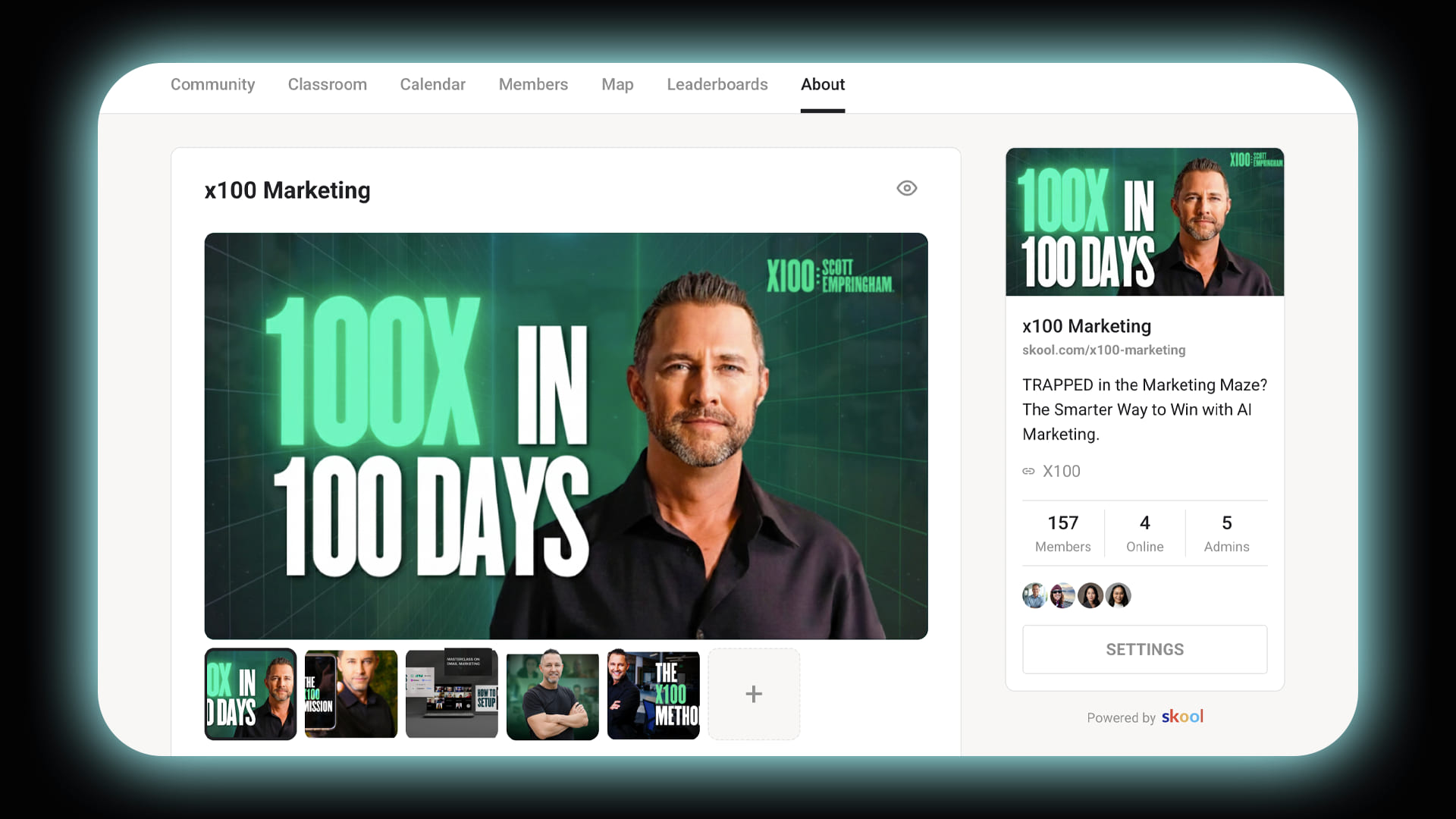
Scott Empringham – x100 Marketing Review: The Complete Growth Marketing Framework for Modern Businesses
In today’s highly competitive digital landscape, businesses need more than basic marketing tactics to stand out. They require a proven framework that combines customer acquisition, conversion optimization, branding, automation, and scalable growth strategies. This is where Scott Empringham – x100 Marketing has gained attention among entrepreneurs, marketers, agency owners, and business leaders looking to accelerate growth and achieve sustainable results.
The program focuses on helping businesses create predictable marketing systems rather than relying on random tactics or short-term trends. By implementing structured processes, companies can generate more qualified leads, improve customer retention, and increase overall profitability.
Whether you’re running an online business, a local company, a service-based agency, or an eCommerce brand, understanding the principles behind this marketing methodology can help you build a stronger foundation for long-term success.
What Is Scott Empringham – x100 Marketing?
Scott Empringham is known for developing practical marketing systems that focus on measurable business growth. The x100 Marketing framework is designed to help businesses identify growth opportunities, optimize customer journeys, and create scalable acquisition channels.
Instead of focusing solely on traffic generation, the methodology emphasizes building complete marketing ecosystems that work together to attract, convert, and retain customers.
The framework typically covers:
- Customer acquisition strategies
- Sales funnel optimization
- Conversion rate improvements
- Marketing automation
- Lead generation systems
- Brand positioning
- Content marketing
- Email marketing campaigns
- Paid advertising strategies
- Customer retention techniques
- Growth analytics and tracking
- Scaling methodologies
The objective is to create a repeatable process that consistently generates results while reducing wasted marketing spend.
Why Marketing Systems Matter More Than Individual Tactics
One of the biggest mistakes businesses make is chasing individual tactics without understanding how each component fits into the larger marketing ecosystem.
Many companies focus on:
- Running Facebook ads
- Posting on social media
- Creating blog content
- Sending email campaigns
However, these efforts often fail because they lack strategic alignment.
A successful marketing system ensures that every component works together toward a common goal. Traffic generation, lead nurturing, sales conversion, and customer retention become interconnected processes rather than isolated activities.
This systems-based approach helps businesses create predictable growth while reducing dependency on any single marketing channel.
Core Principles Behind the x100 Marketing Framework
Customer-Centric Marketing
Modern consumers expect personalized experiences. Businesses that understand customer behavior are significantly more likely to achieve higher conversion rates.
The framework emphasizes:
- Understanding customer pain points
- Identifying buyer motivations
- Mapping customer journeys
- Creating personalized messaging
- Building trust throughout the sales process
When businesses deeply understand their audience, marketing becomes more effective and efficient.
Data-Driven Decision Making
Successful marketing relies on measurable outcomes.
Rather than making assumptions, marketers should evaluate:
- Website traffic metrics
- Conversion rates
- Lead quality
- Customer acquisition costs
- Return on ad spend
- Customer lifetime value
- Email engagement rates
Data provides the foundation for continuous improvement and allows businesses to make informed growth decisions.
High-Converting Sales Funnels
A sales funnel guides prospects through the buying journey.
The framework focuses on optimizing every stage:
Awareness Stage
Potential customers first discover the brand through:
- Search engines
- Social media platforms
- Paid advertisements
- Video content
- Referral traffic
Consideration Stage
Prospects evaluate solutions through:
- Educational content
- Case studies
- Product demonstrations
- Webinars
- Lead magnets
Decision Stage
Conversion-focused assets help prospects become customers:
- Sales pages
- Consultations
- Limited-time offers
- Testimonials
- Risk-reversal strategies
An optimized funnel can dramatically increase conversion rates without increasing advertising spend.
Lead Generation Strategies
Lead generation remains one of the most important aspects of business growth.
Effective strategies include:
Content Marketing
High-quality content establishes authority and attracts potential customers.
Popular content formats include:
- Blog posts
- Guides
- Whitepapers
- Videos
- Podcasts
- Tutorials
- Industry reports
Educational content helps businesses build trust before asking for a sale.
Email Marketing
Email remains one of the highest ROI marketing channels available.
Benefits include:
- Direct audience communication
- Automated follow-up sequences
- Personalized messaging
- Customer nurturing
- Retention campaigns
Businesses that effectively use email marketing often experience stronger customer relationships and higher conversion rates.
Paid Advertising
Strategic advertising can accelerate business growth when managed correctly.
Common platforms include:
- Google Ads
- Facebook Ads
- Instagram Ads
- YouTube Ads
- LinkedIn Ads
- TikTok Ads
The key is aligning advertising campaigns with clear business objectives and optimized landing pages.
Conversion Rate Optimization
Generating traffic is only half the equation.
The ability to convert visitors into customers often determines overall profitability.
Key optimization factors include:
Landing Page Design
Effective landing pages typically feature:
- Clear headlines
- Strong value propositions
- Persuasive copy
- Social proof
- Simple navigation
- Strong calls-to-action
Small improvements can produce substantial increases in conversion rates.
User Experience Optimization
Visitors should be able to:
- Navigate easily
- Find information quickly
- Complete actions effortlessly
- Access mobile-friendly pages
A seamless user experience reduces friction and improves engagement.
A/B Testing
Continuous testing helps identify winning strategies.
Businesses can test:
- Headlines
- Buttons
- Images
- Offers
- Pricing structures
- Page layouts
Over time, incremental improvements can create significant revenue growth.
Marketing Automation for Scalability
As businesses grow, manual processes become inefficient.
Marketing automation helps streamline operations through:
- Automated email sequences
- Lead scoring systems
- CRM integrations
- Customer onboarding workflows
- Retargeting campaigns
- Behavioral tracking
Automation enables businesses to maintain personalized communication while serving larger audiences.
Building a Strong Brand Position
Brand positioning influences how customers perceive a company.
Strong brands often share common characteristics:
Clear Messaging
Customers immediately understand:
- What the company offers
- Who it serves
- Why it is different
- What value it provides
Clarity often outperforms complexity.
Consistent Identity
Consistency across all marketing channels creates trust.
This includes:
- Visual branding
- Tone of voice
- Customer experience
- Marketing materials
- Website design
Strong branding increases recognition and customer loyalty.
Customer Retention and Lifetime Value
Acquiring customers is expensive.
Retaining customers is often far more profitable.
Effective retention strategies include:
- Loyalty programs
- Personalized communication
- Exceptional customer support
- Educational resources
- Community building
- Upselling opportunities
Increasing customer lifetime value can significantly improve overall business profitability.
Scaling Business Growth
Once foundational systems are in place, businesses can begin scaling.
Successful scaling often involves:
Expanding Traffic Sources
Businesses reduce risk by diversifying acquisition channels.
Examples include:
- Organic search
- Social media
- Paid advertising
- Partnerships
- Influencer collaborations
- Referral programs
Team Development
Growth requires operational support.
Key roles may include:
- Marketing managers
- Content creators
- Media buyers
- Designers
- Sales professionals
- Customer success specialists
Building the right team supports long-term expansion.
Process Documentation
Documented systems ensure consistency.
Businesses can:
- Train employees faster
- Maintain quality standards
- Improve efficiency
- Scale operations more effectively
Systemization is a major component of sustainable growth.
Who Can Benefit from This Marketing Approach?
The principles taught within this framework can benefit:
Entrepreneurs
Individuals looking to grow startups and online businesses.
Agency Owners
Marketing agencies seeking predictable client acquisition.
Coaches and Consultants
Professionals wanting to generate qualified leads consistently.
eCommerce Businesses
Online stores aiming to increase conversions and revenue.
Service-Based Businesses
Companies focused on attracting and retaining clients.
Established Brands
Organizations seeking scalable growth opportunities.
The concepts are flexible enough to apply across multiple industries and business models.
Key Benefits of Implementing a Growth Marketing Framework
Businesses that adopt structured marketing systems often experience:
- Increased lead generation
- Higher conversion rates
- Improved customer retention
- Better return on investment
- Stronger brand authority
- Greater scalability
- More predictable revenue
- Enhanced customer experiences
- Improved operational efficiency
- Long-term business growth
The combination of strategy, systems, and execution creates a competitive advantage in today’s digital marketplace.
Final Thoughts
Building a successful business requires more than occasional marketing campaigns. Sustainable growth comes from implementing proven systems that consistently attract, convert, and retain customers.
Scott Empringham – x100 Marketing presents a strategic approach centered on growth-focused marketing principles, customer acquisition systems, conversion optimization, automation, and long-term scalability. Rather than relying on isolated tactics, the framework encourages businesses to create interconnected marketing ecosystems that drive measurable results.
For entrepreneurs, marketers, agencies, consultants, and business owners seeking a structured growth methodology, the concepts associated with this marketing approach offer valuable insights into building predictable revenue and achieving sustainable business expansion. By focusing on data-driven decision-making, customer experience, and scalable systems, organizations can position themselves for long-term success in an increasingly competitive marketplace.


Reviews
There are no reviews yet.